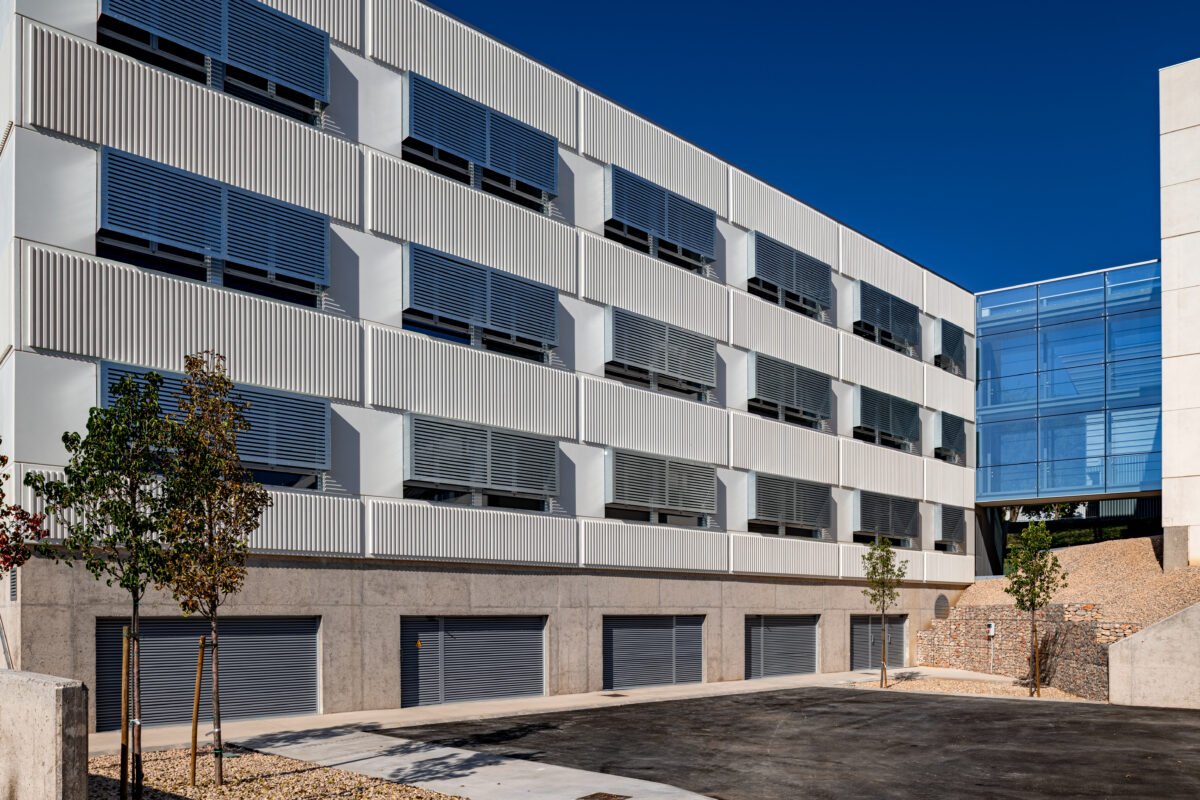
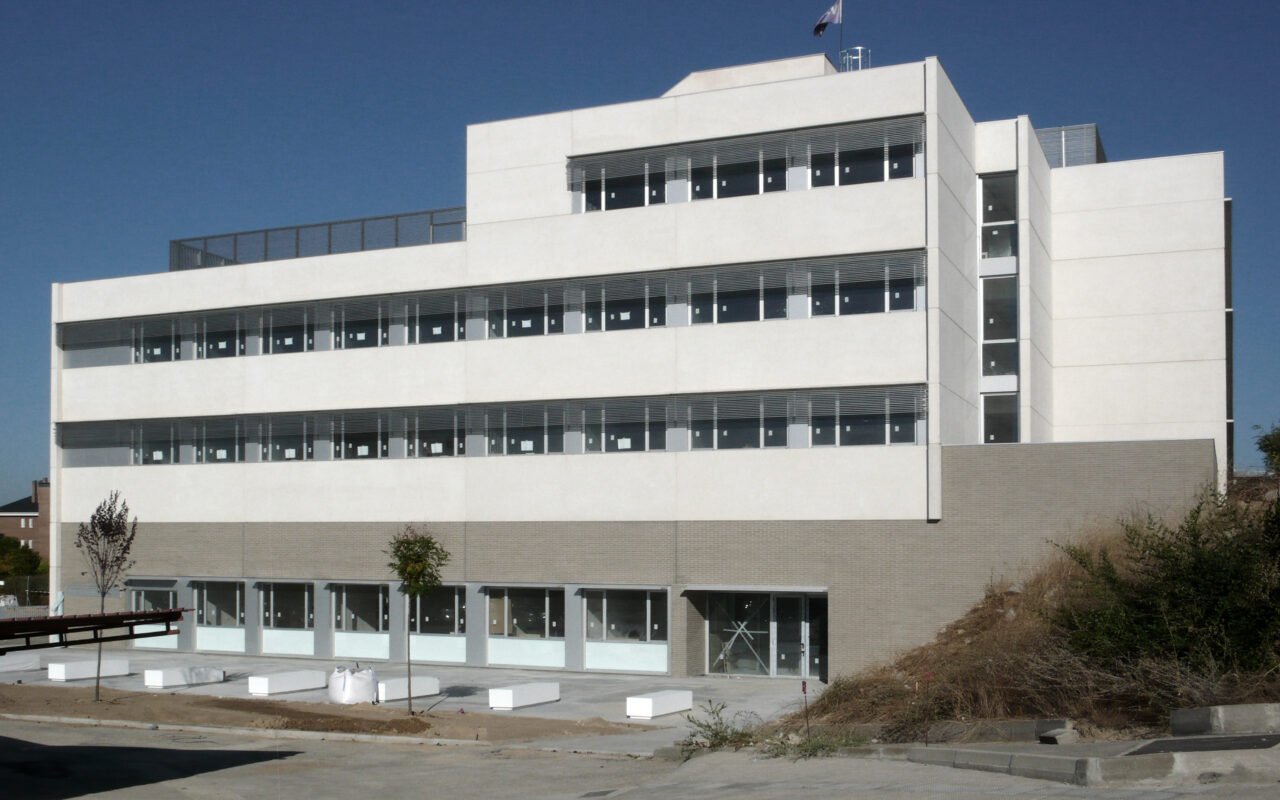
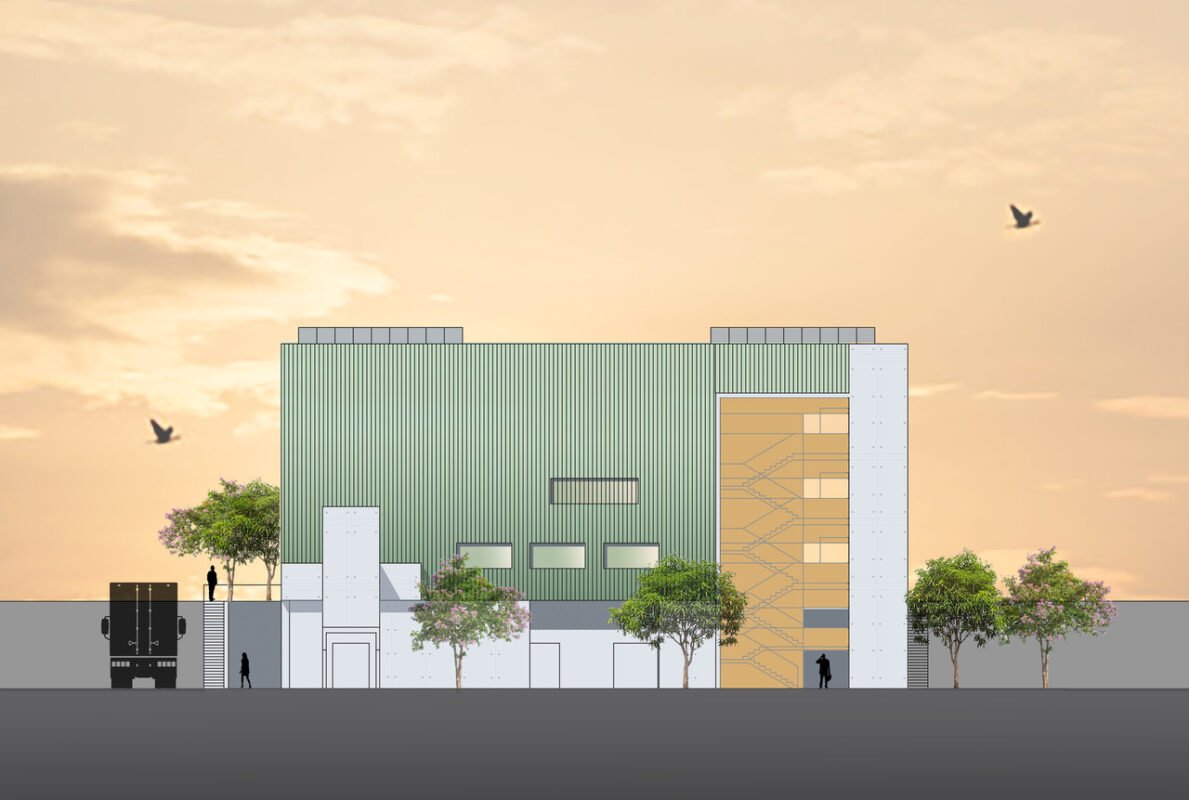
The Carlos III Health Institute Majadahonda campus brings together the Institute’s main buildings dedicated to research across its many fields, alongside offices, administrative areas and spaces for public engagement.
The project focuses on the refurbishment of a two-storey 1970s building, originally clad in limestone with a pitched slate roof, and with significant shortcomings in terms of thermal and acoustic performance.
The aim is to improve the insulation of the building envelope and update the overall image of the facility, aligning it with its role as a centre for high-tech laboratories and research.
The proposal introduces a new glass skin enveloping all façades, ensuring interior daylight while alternating between two finishes: fully transparent and translucent opal white. Point-fixed glazing with expressed joints to avoid expansion issues is fitted to a lightweight steel structure anchored to the existing frame. Maintenance walkways in galvanised steel grating are incorporated between the two façades, creating a cavity that acts as both thermal and acoustic buffer for the existing building.
This new façade system provides the compositional and formal coherence the building currently lacks, while also protecting the external envelope and windows from climate impacts and thermal stress.
The structure is designed to be ‘suspended’ from the existing frame, fixed with chemical anchors to the primary load-bearing elements. To further enhance thermal performance, the façade will also be fitted with an external insulation system (SATE), composed of insulating mortar panels, reinforcing mesh and a light grey render finish, optimising the building’s energy efficiency.
The construction method ensures maximum efficiency, using dry-construction techniques to guarantee quality, shorten delivery times and minimise disruption to the building’s day-to-day use.