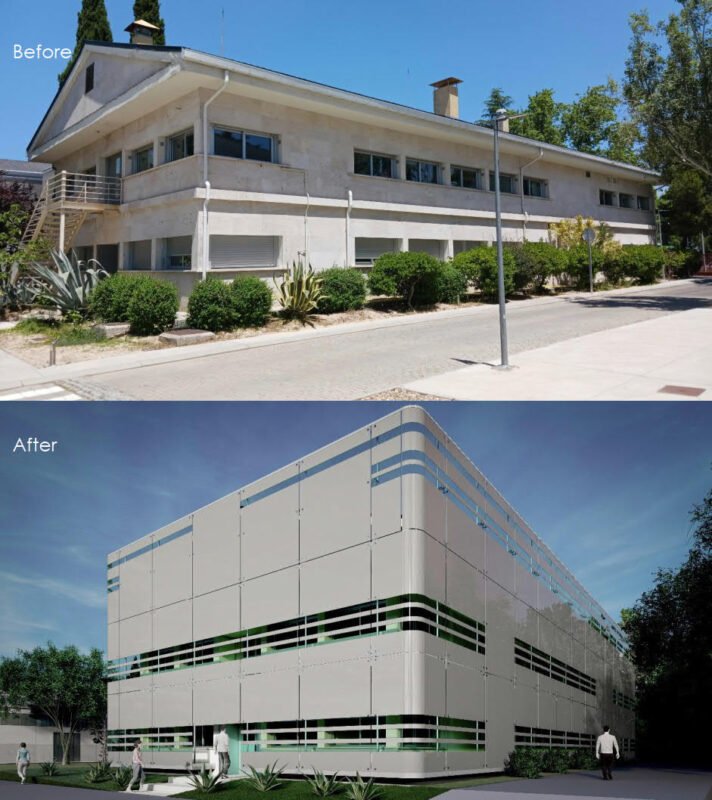
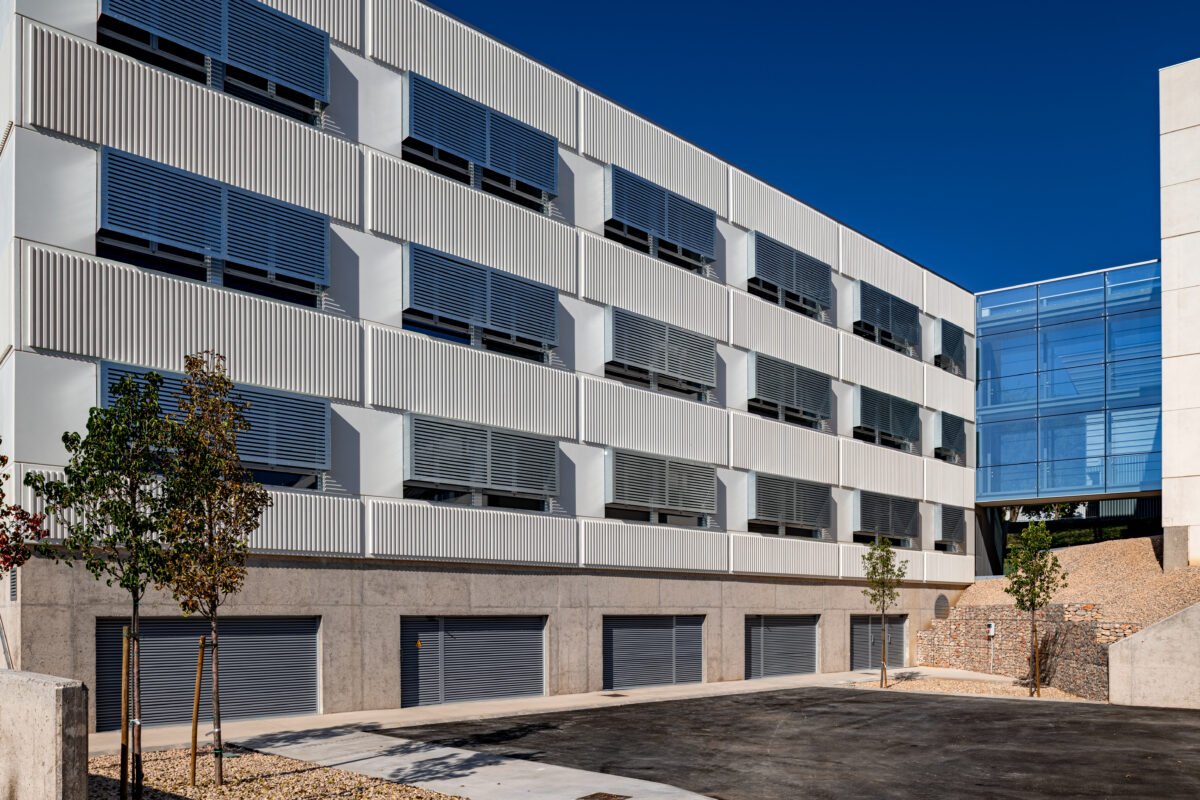
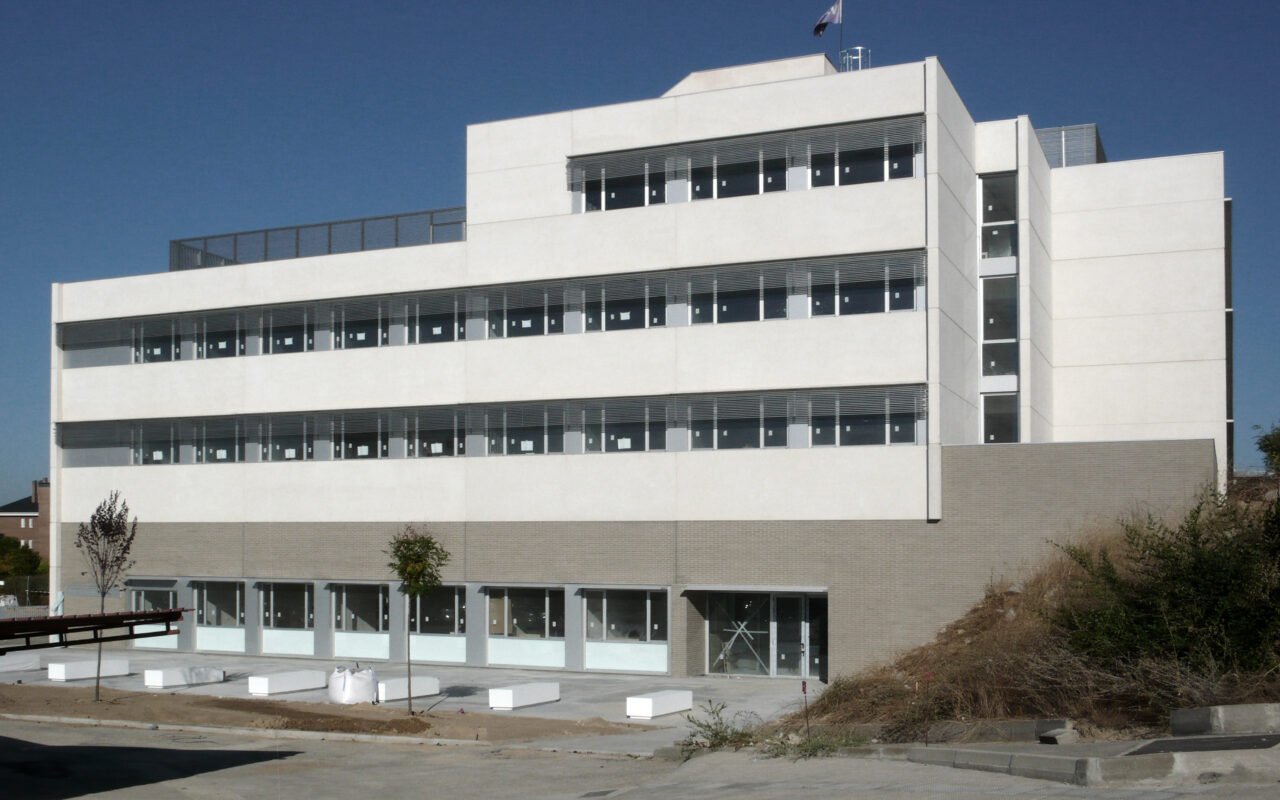
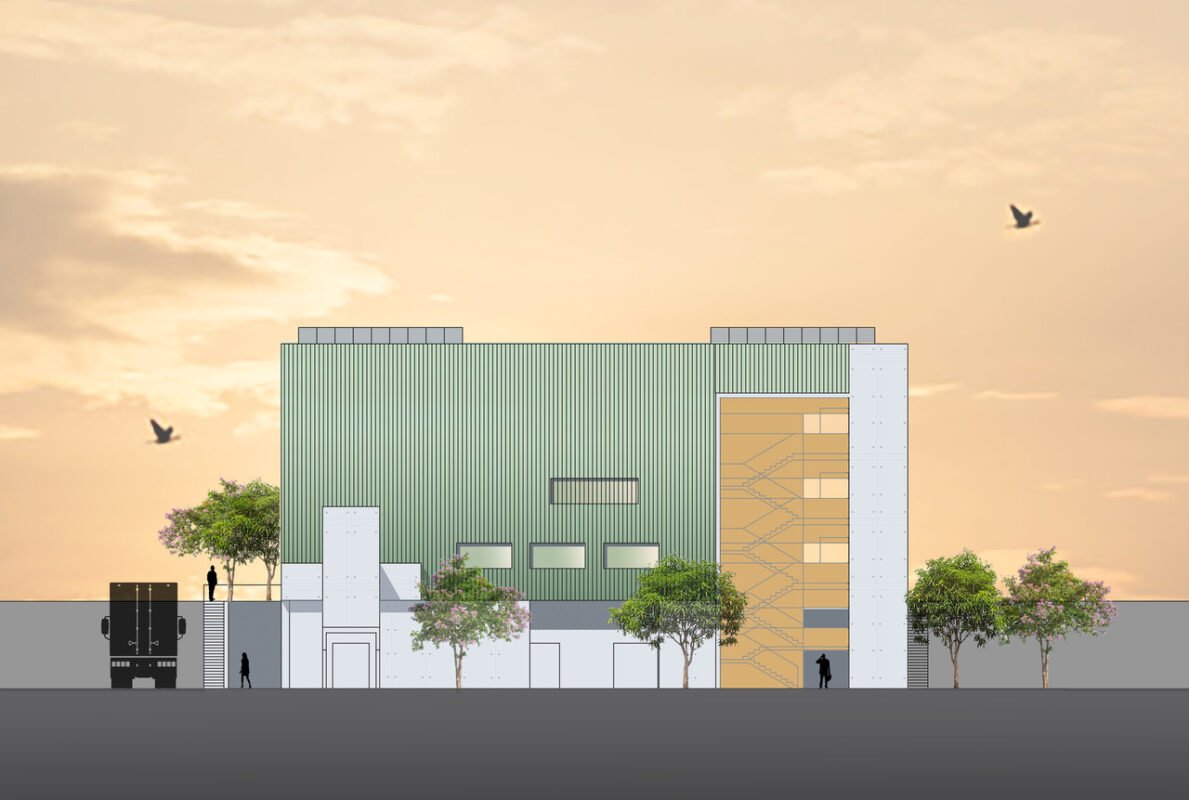
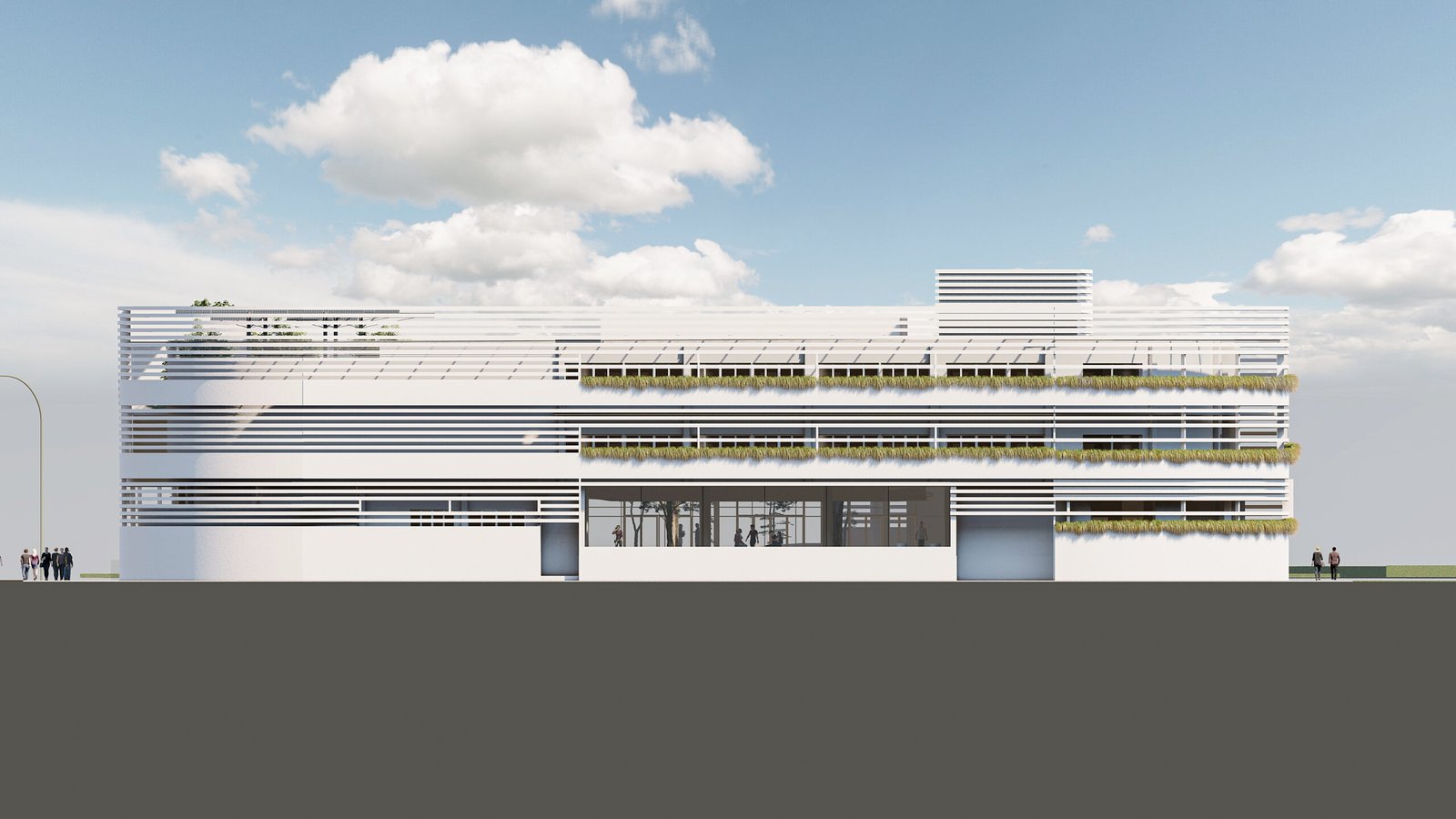
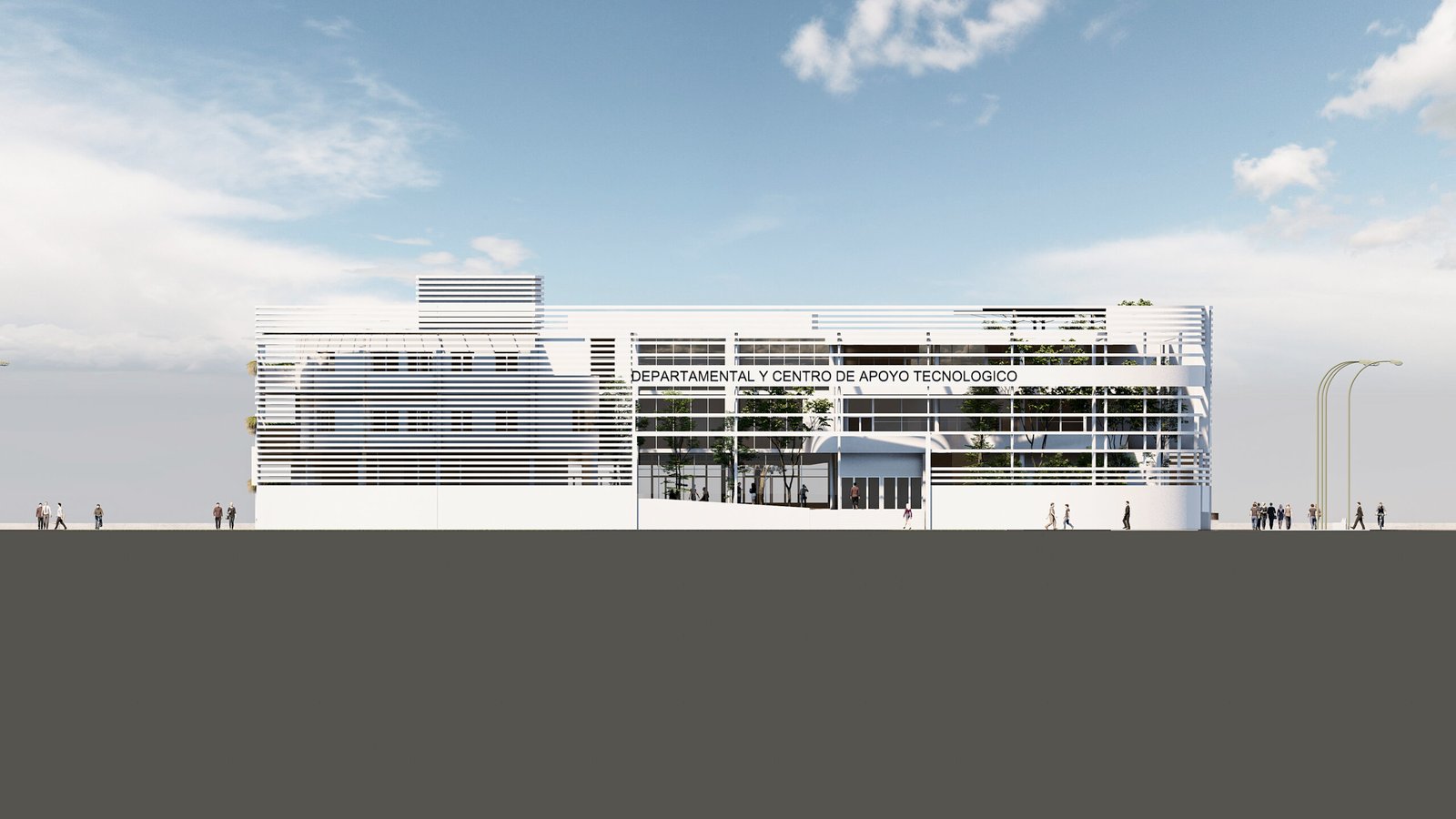
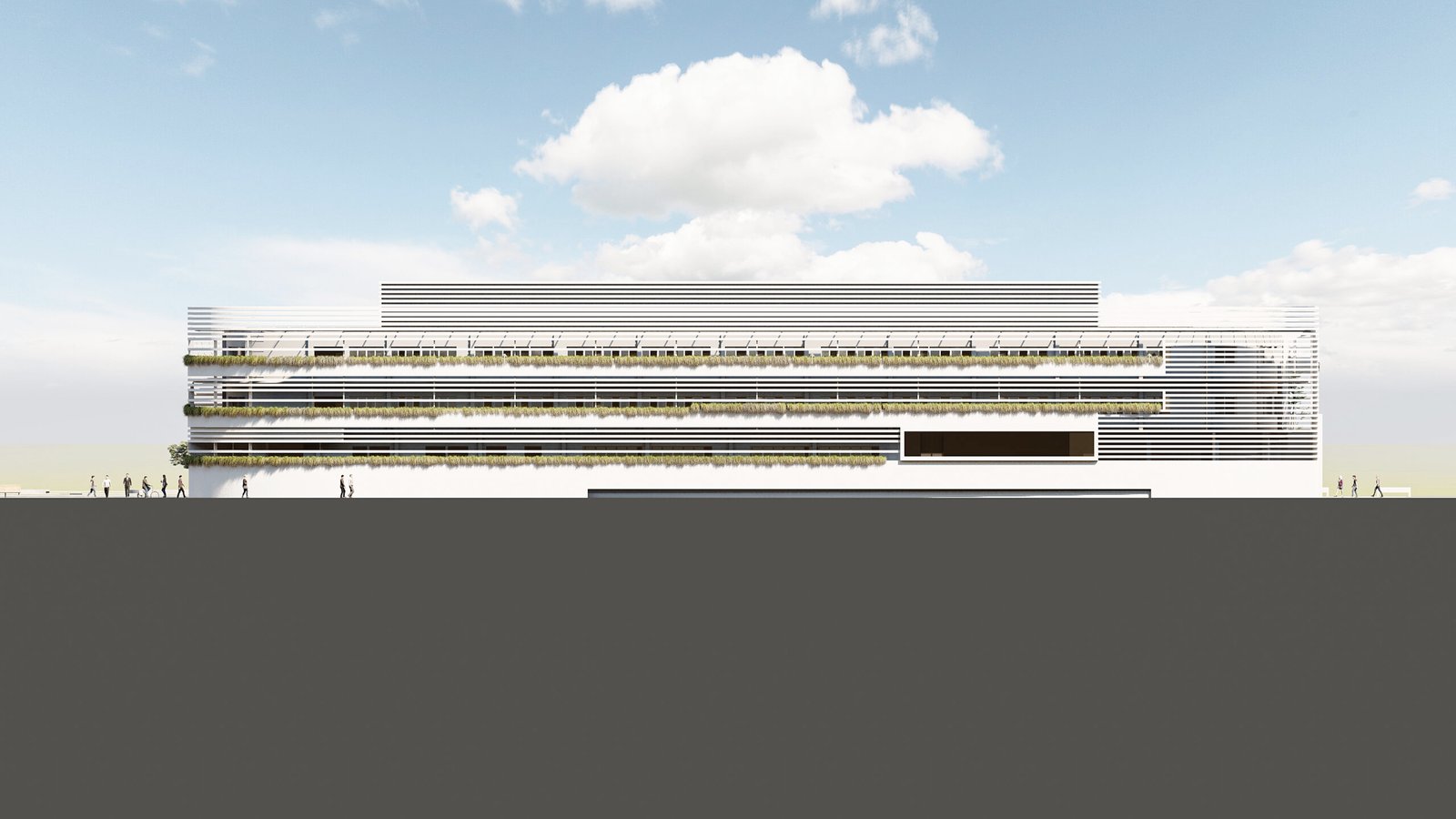
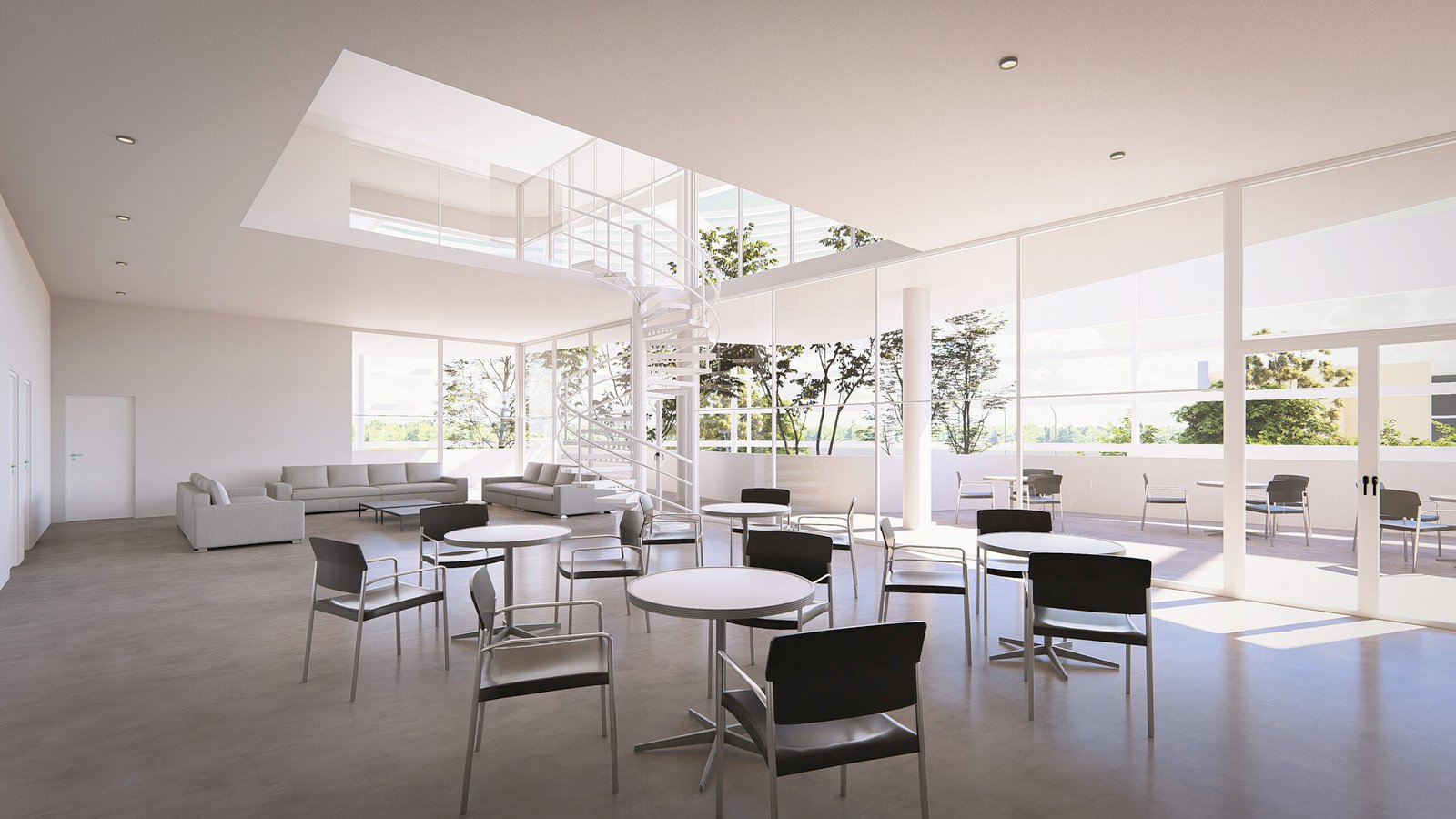
The architecture proposed is functionally efficient, bioclimatic, flexible, sustainable in terms of energy and the environment, and responds to the brief with viable and cost-effective construction.
Greenery is used throughout the building, not only in outdoor areas but also on the envelopes, for a dynamic and climate-efficient performance. In summer, plants filter sunlight and solar radiation, while in winter they regulate airflow between the outer and inner skins to retain heat from the sun.
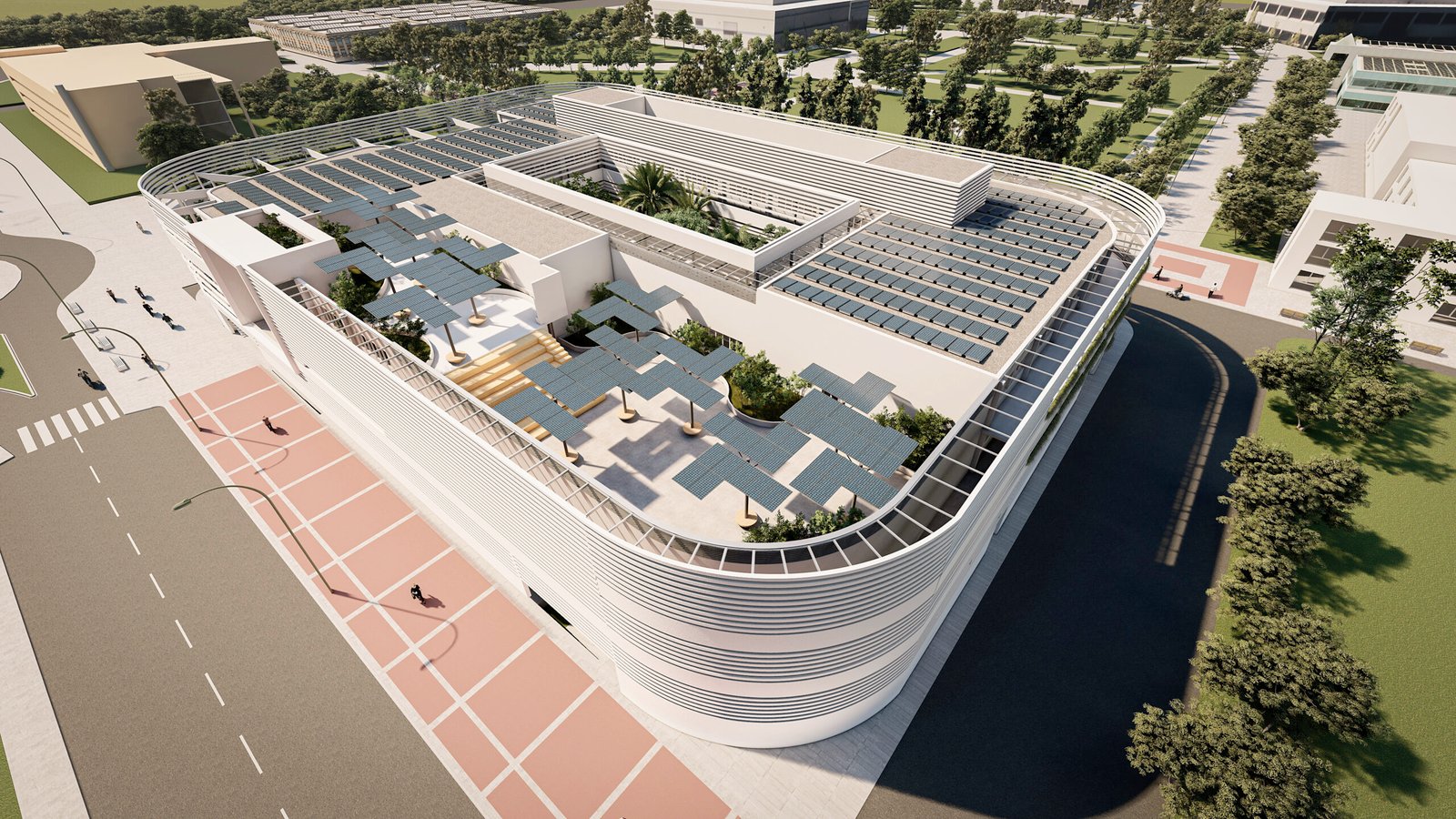
Three key elements must be carefully considered to achieve a ‘Net Zero Carbon’ building: the use of modular and prefabricated construction systems, large-scale clean energy generation to ensure energy self-sufficiency, and the selection of recycled and recyclable materials.
Compliance with leading sustainability standards such as LEED and BREEAM, and with health and well-being benchmarks like WELL, is essential, extending not only to the building’s operational performance but also, and more importantly, to the physical and psychological well-being of students and staff.
The design addresses the requirements of the brief through a resilient approach, enabling adaptability and disassembly in line with EU Taxonomy principles for the transition to a circular economy.
Stepped terraces facilitate circulation between the first and second floor roof gardens and provide space for both staff and students to sit and work or rest among low-growing plants and flowering trees. In addition to natural tree cover, ‘solar trees’ will provide both shade and free solar energy, contributing to the photovoltaic system concentrated on the technical roof.
A prefabricated modular structure is proposed for most of the building. The maintenance corridor between the bioclimatic outer skin and the interior envelope provides both support for living-wall planters on the sun-facing sides, and access to the building’s perimeter structure.
All finishes prioritise high recycled-content materials, sourced locally where feasible from manufacturers able to provide environmental product declarations, enhancing the health and comfort of occupants.