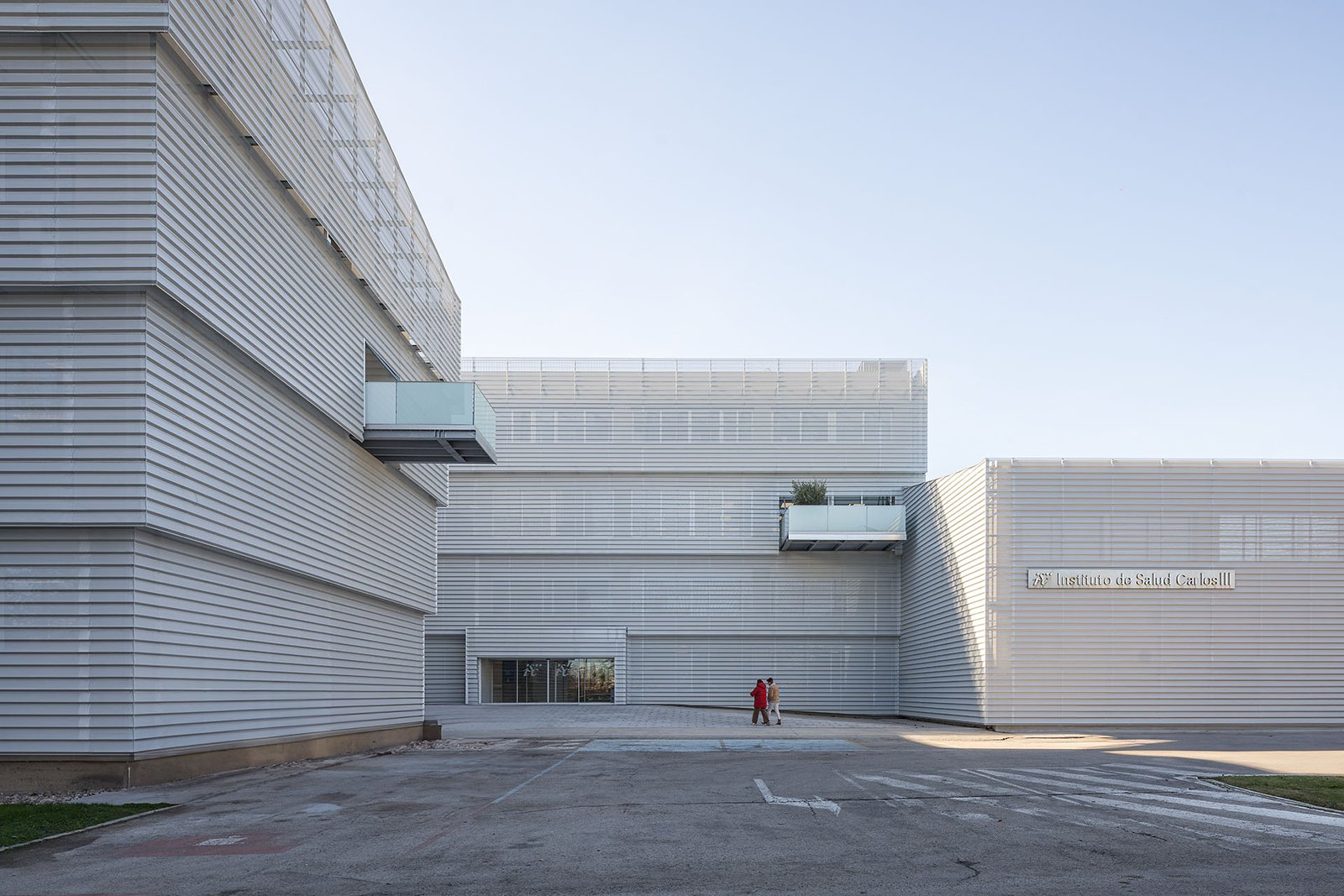
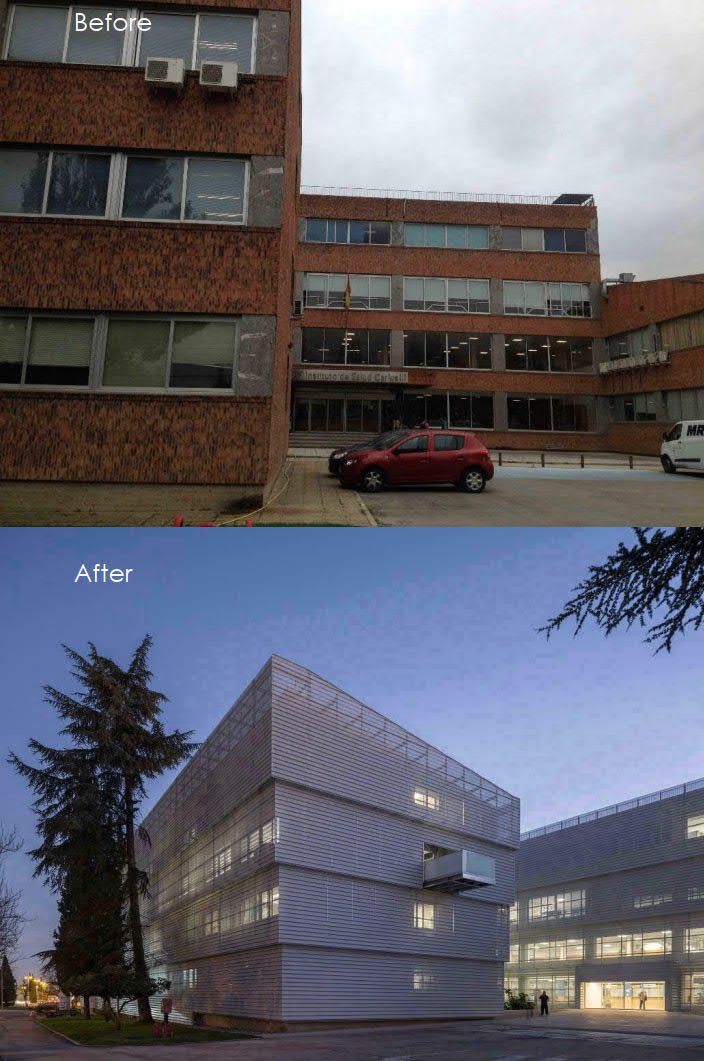
The building is located on the Majadahonda Campus of the Carlos III Health Institute, dedicated to research.
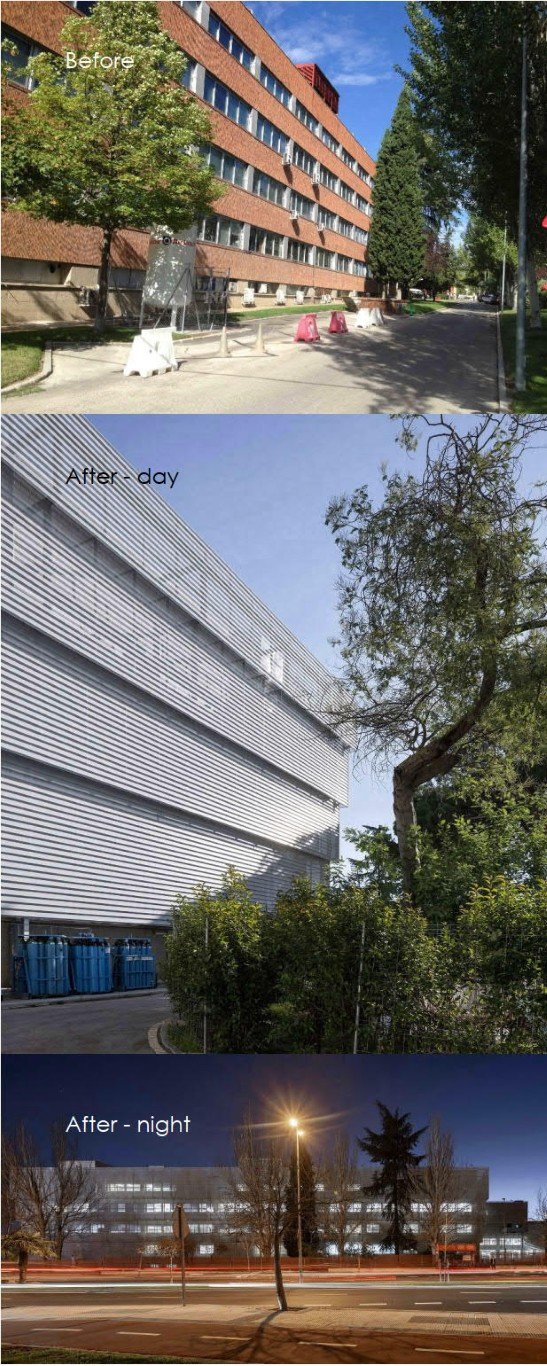
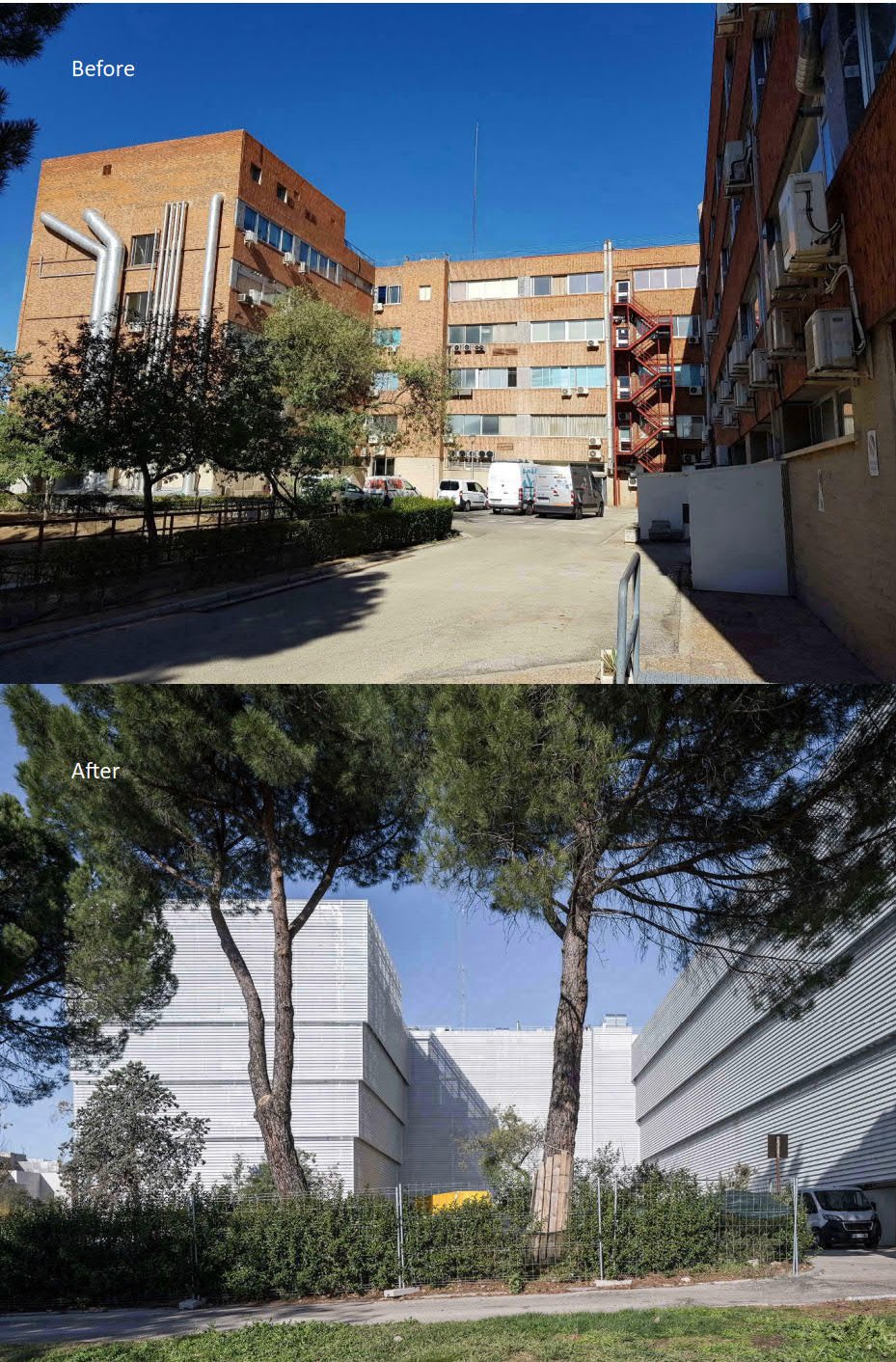
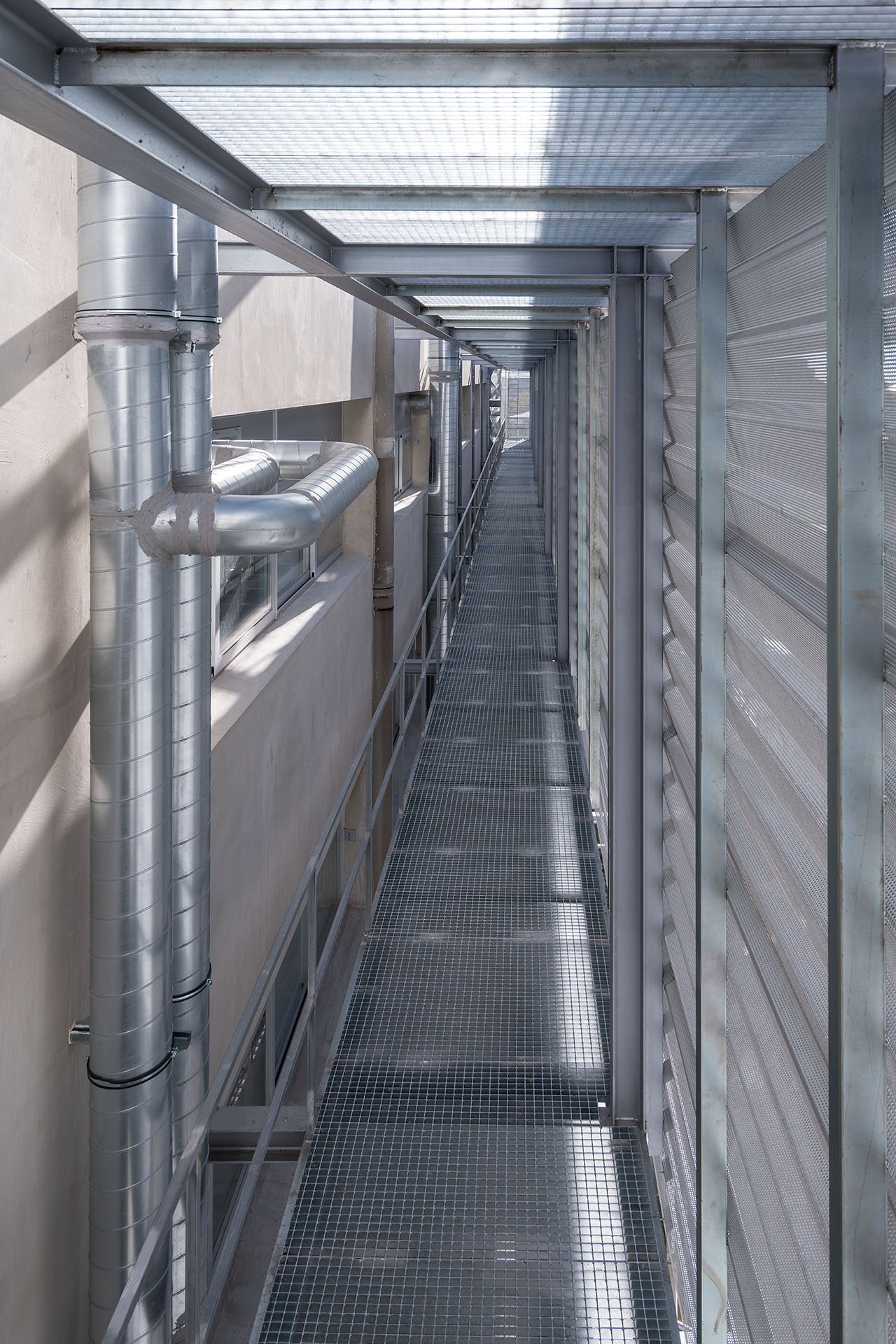
Equipment and ducts had been placed on the building’s exterior to address the lack of space for the building’s services and to replace outdated apparatus, which spoiled the overall appearance.
The upgrades needed to meet the new requirements of the building complex called for the distribution of the building’s services on the outside, across the façades. Ductwork was installed vertically from the roof to the various floors, serving laboratories and workspaces where necessary.
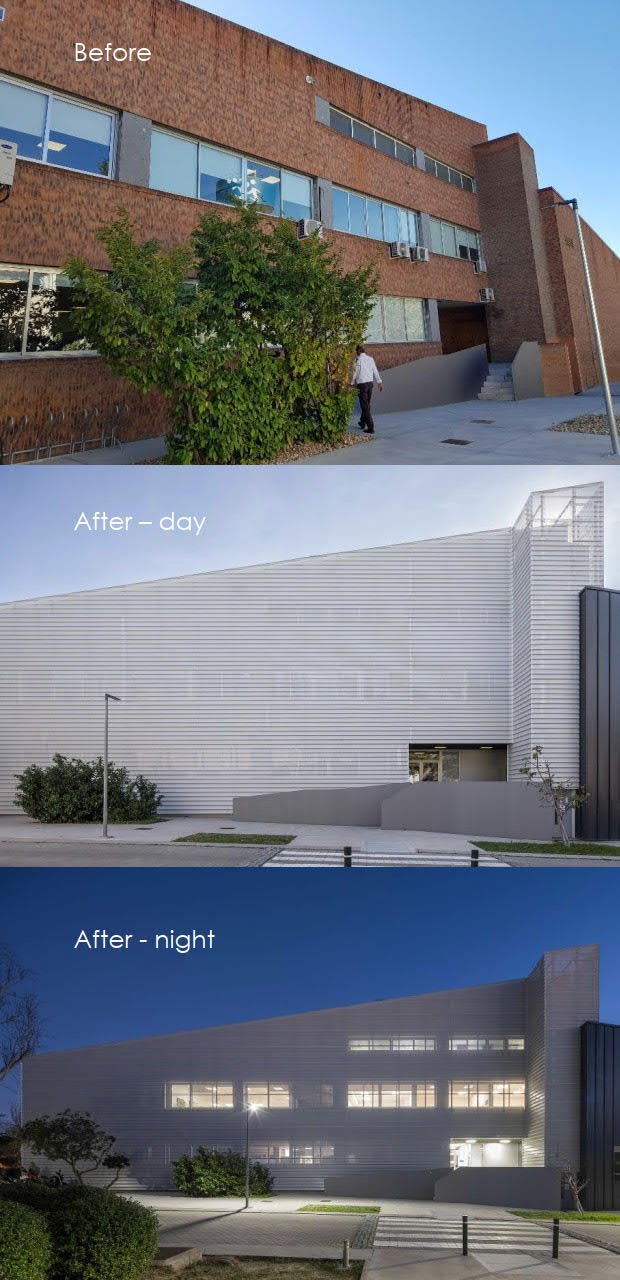
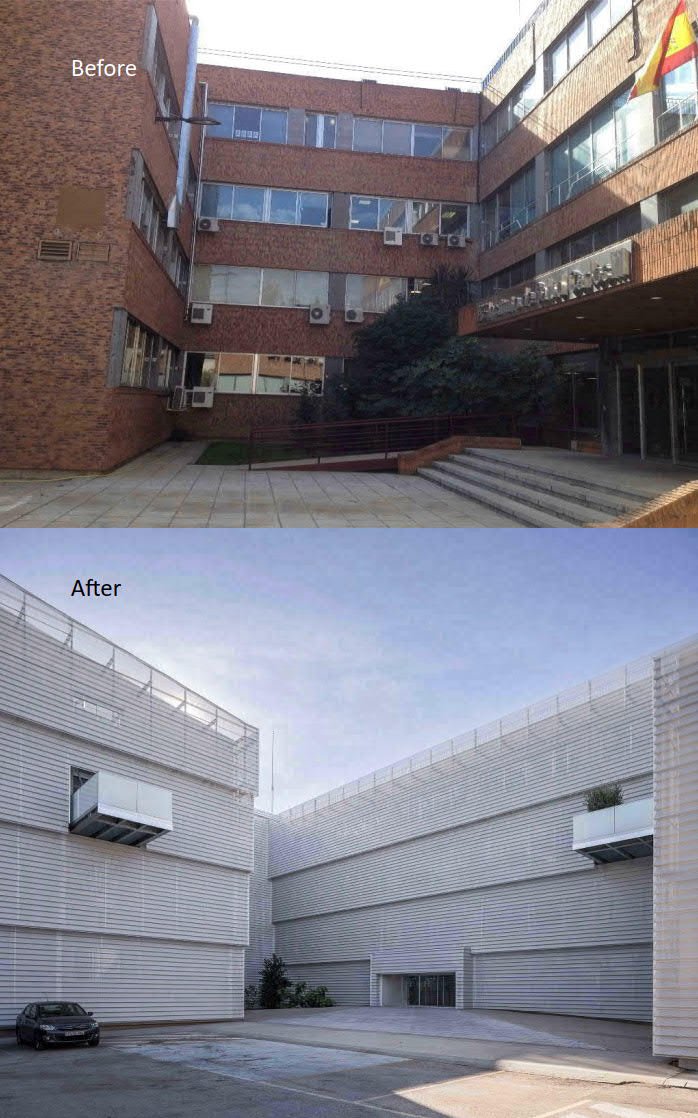
Analysis of the building envelope revealed thermal and acoustic insulation issues, which, in addition to the progressive deterioration of the façade materials made drastic action imperative to improve insulation, stability and appearance. The opportunity therefore arose to give the whole building a new image, updating both its uses and its architecture.
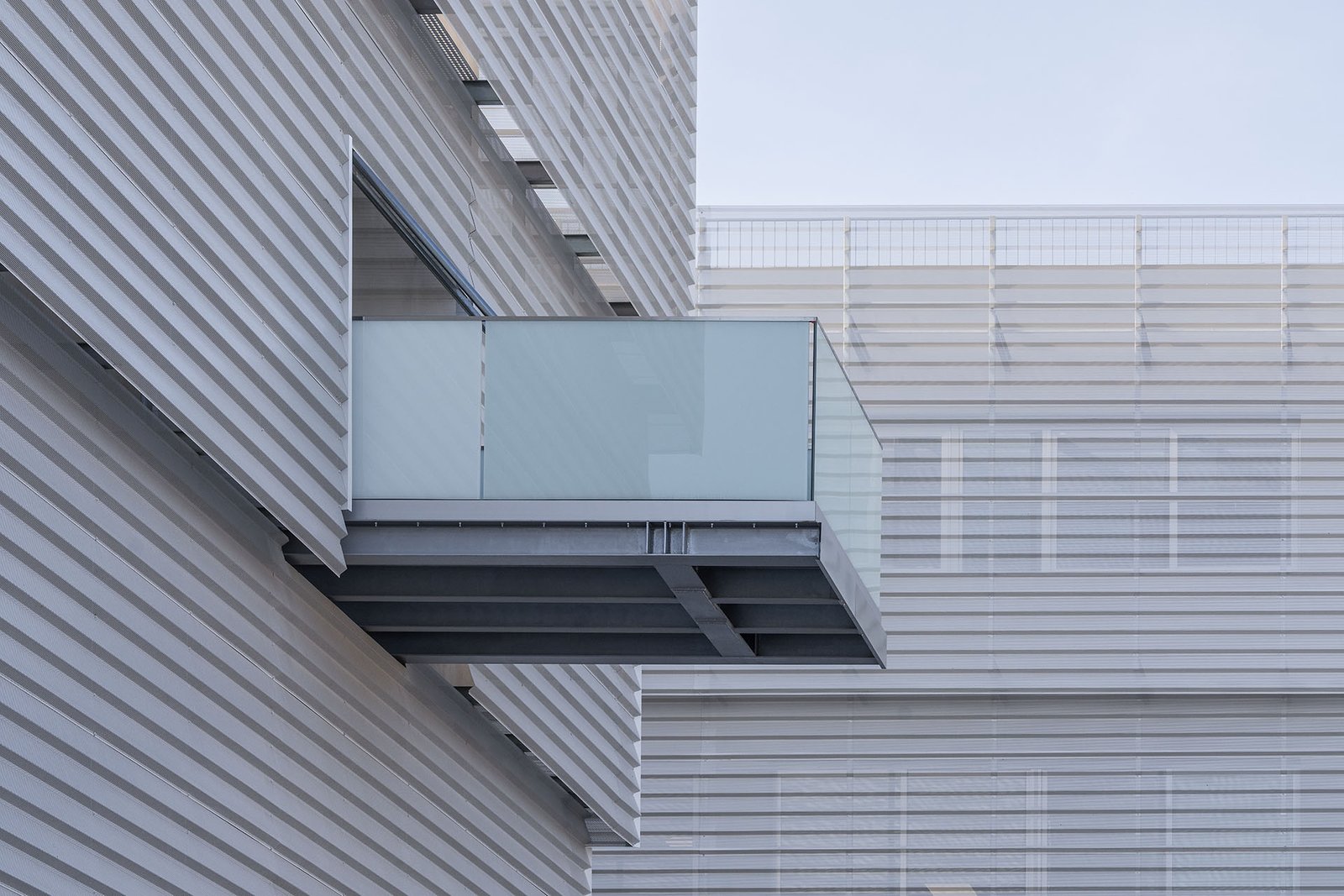
The new envelope is separated from the existing walls in accordance with the different dimensions of the building services equipment. Machinery is located on the roof and the envelope is clad in tiered layers to accommodate the decreasing dimensions of the ducts as they run from the top of the building down to the lower floors. This design, which follows a strict functional relationship with the building services, defines the volume and justifies the proposed form.
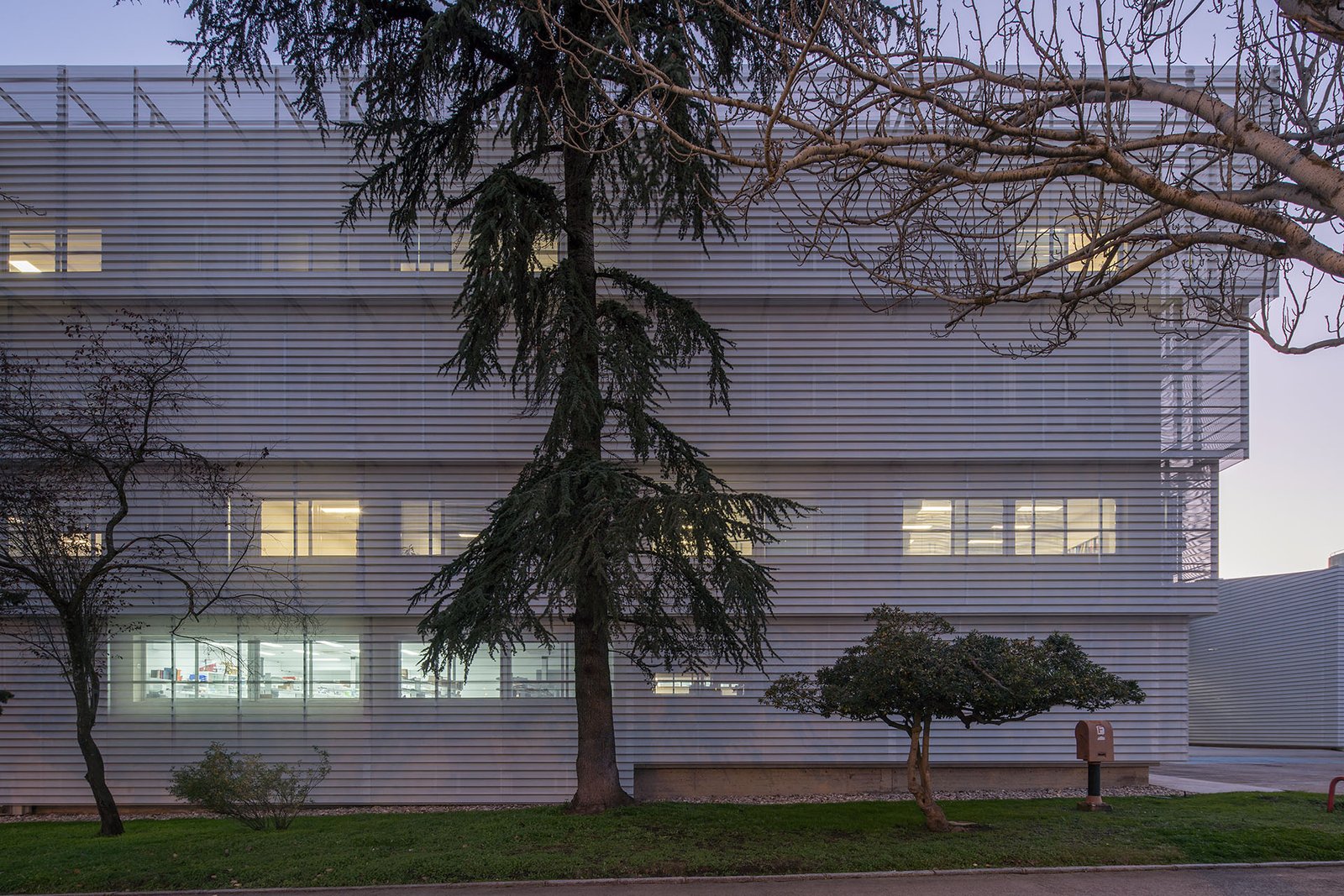
The project involves an insulating exterior cladding on the existing walls, on all the façades, and a new skin of white mesh panels to achieve homogeneous composition and form, which the building previously lacked. This skin allows natural light into the building while mitigating direct sunlight at hotter times of the year and concealing the building’s services. An accessible gallery between this new skin and the building facilitates maintenance and cleaning.
The design makes the building look different by day and at night. During sunlight hours, the building is a blind and solid volume with hardly any openings. Only the shadows created by the new building envelope’s tiered layers are visible. However, when evening comes and night falls, the new metal mesh façade disappears behind the interior light shining out from the workspaces.