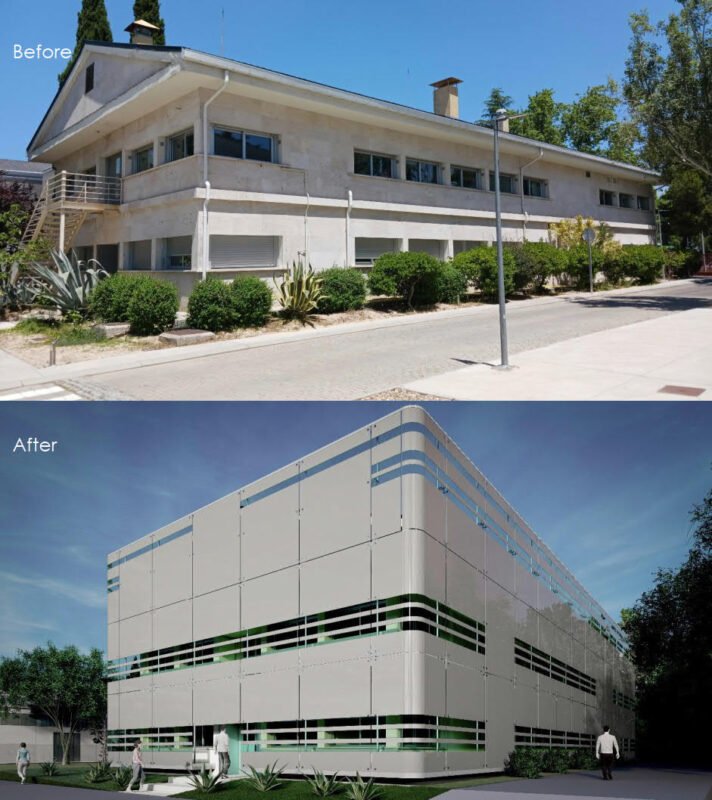
The EU Recovery and Resilience Plan includes the construction of a maximum-security biological laboratory (Biosafety Level 4, WHO BSL-4) designed for research into high-risk pathogens that cause infectious diseases in humans and animals.
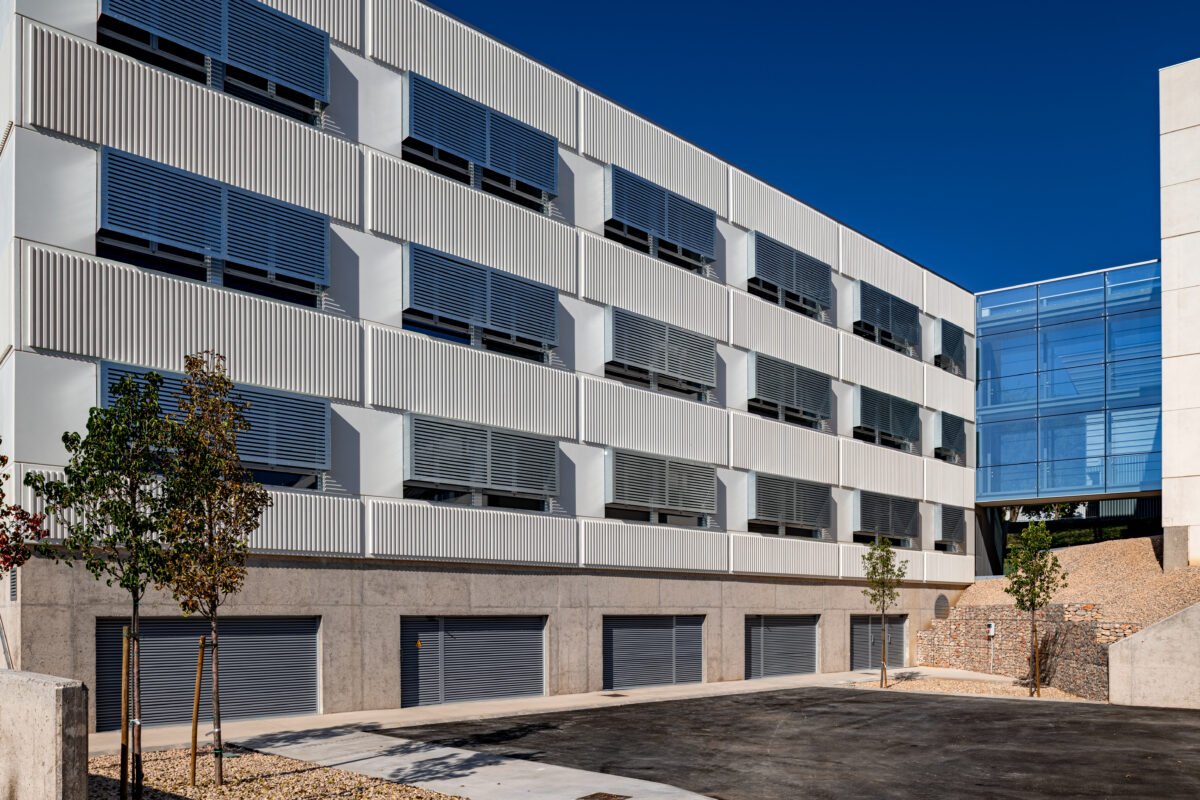
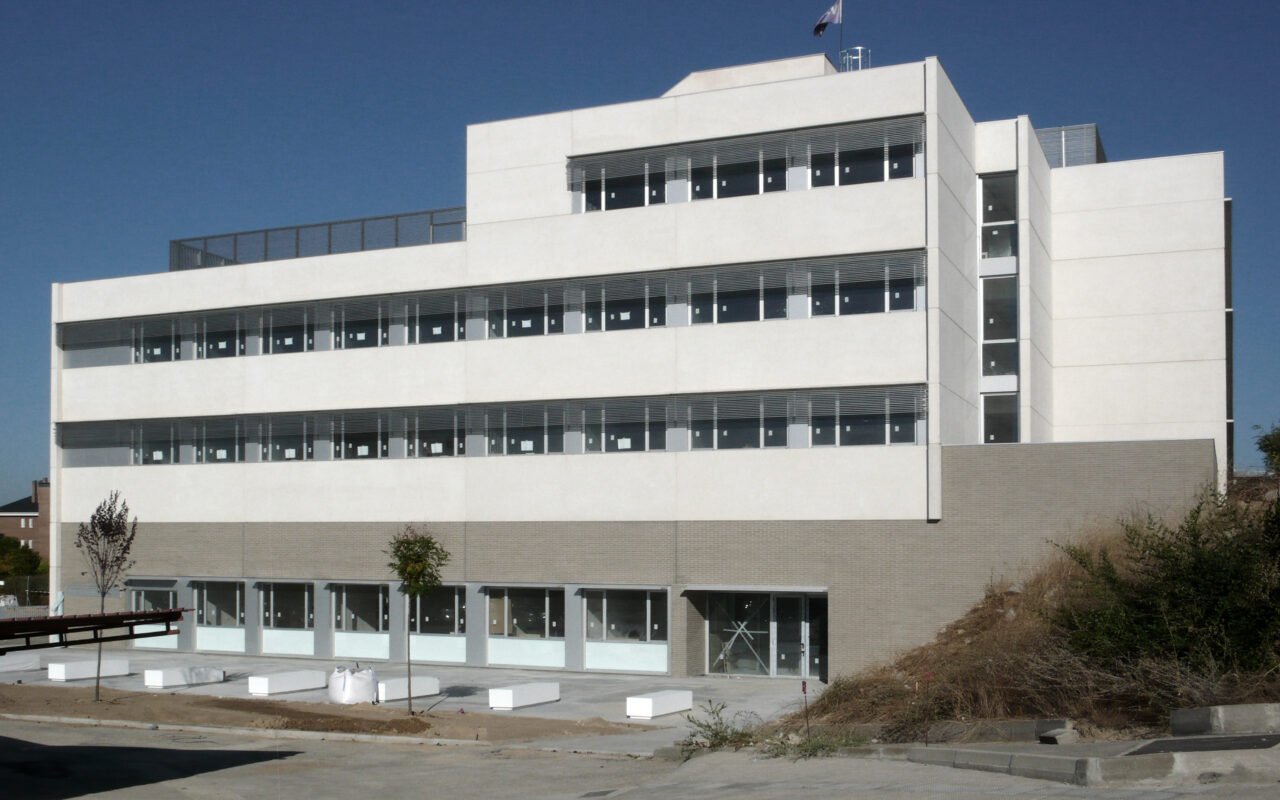
The INIA-CISA/CSIC research centre comprises two interconnected buildings housing High Biocontainment Areas, along with BSL-2 laboratories, administration spaces, and conventional support facilities. The new building will be independent from the rest of the complex but directly connected to the existing Biosafety Level 3 laboratory building via a laboratory-level walkway.
The new NCB4A animal facility will provide BSL-4 containment for experiments with small and large animals inoculated with Risk Group 4 pathogens and equivalent agents.
The ‘box-in-box’ design concept incorporates a peripheral corridor on the high-containment laboratory floor.
This approach ensures passive containment and minimises risk, with sealed service penetrations running from the top and ground floors through the reinforced slab directly to each laboratory.
All the mechanical and electrical systems are designed according to energy-saving and environmental sustainability criteria, in strict compliance with current regulations and international standards for BSL-4 biocontainment facilities.
The frame structure is composed of reinforced concrete walls, columns and slabs, providing passive containment for the laboratory floor.
The envelope enclosing the reinforced concrete frame combines thermal insulation with metal cladding and concrete walls. Perforated metal will be used over openings, except on the laboratory floor, where windows will be fitted with airtight safety glass. Concrete walls will either be concealed or left exposed, depending on the requirements of each façade.
All the building systems and services will be controlled from a centralised building management system.